For years, Airbnb and VRBO have dominated the conversation among vacation rental managers in North America. But quietly, Booking.com has become one of the largest sources of short-term rental bookings worldwide — and many U.S.-based managers are starting to take notice. If you’re looking to diversify your booking channels, reduce reliance on two platforms, and tap into a massive international audience, Booking.com may deserve a spot in your distribution strategy. The catch? It operates differently than Airbnb or VRBO, and success requires understanding what makes it tick.
Why Booking.com Is Worth Considering
Booking.com offers access to a massive global audience and a different type of traveler than Airbnb or VRBO, making it a powerful diversification tool.
Booking.com processes more than 1.5 billion room nights per year and has spent decades building brand trust with international travelers. For vacation rental managers, this opens the door to guests who might never think to search on Airbnb or VRBO first — including European travelers, business travelers, and last-minute bookers. Threads on r/vacationrentals and r/AirBnBHosts frequently mention that Booking.com fills shoulder-season and weekday gaps that other OTAs leave empty. Hosts in destination markets like Florida, the Smokies, and coastal towns often report that Booking.com guests tend to book shorter stays, which can be ideal for filling those awkward two- and three-night gaps between longer reservations. Add in instant booking, no host approval friction, and a commission structure (typically 15%) that’s competitive with VRBO, and the case for listing becomes compelling.
The Cons and Common Complaints
Booking.com’s policies favor guests heavily, and managers who don’t plan accordingly often run into frustrating issues.
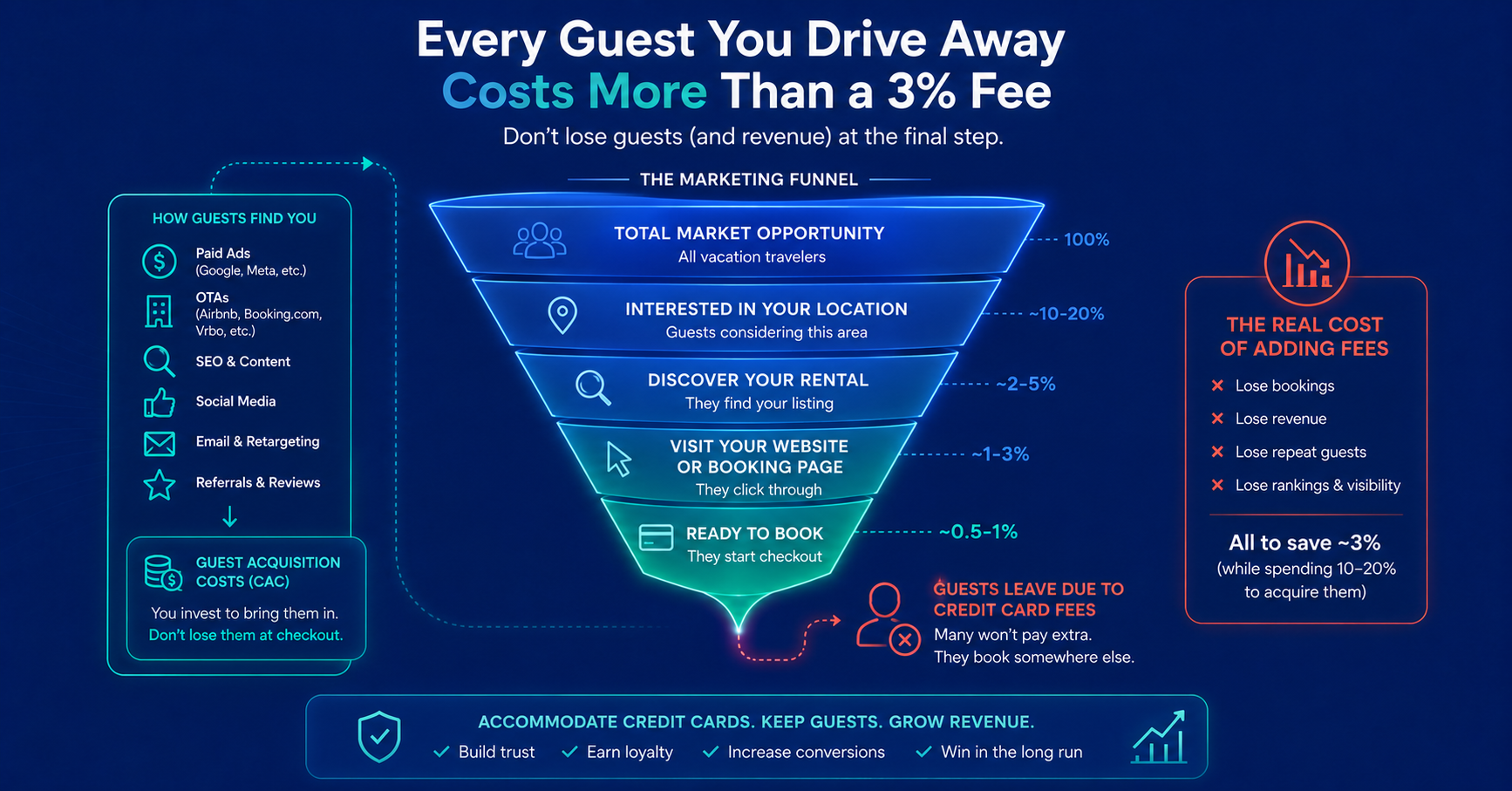
Browse any short-term rental forum and you’ll find honest complaints about Booking.com. The most common grievances center on guest-friendly cancellation policies, the platform’s reluctance to enforce damage claims, and credit card processing — Booking.com typically passes virtual or guest credit card details to the host rather than collecting payment directly, which means you’re responsible for charging the card and handling any declines. Reddit users frequently mention chargeback risk, no-shows, and guests who book without fully understanding that a vacation rental isn’t a hotel. There’s also a learning curve with the extranet (Booking.com’s host dashboard), which many describe as clunky compared to Airbnb’s interface. Finally, Booking.com penalizes cancellations from the host side heavily, so calendar accuracy and channel sync are non-negotiable. None of these issues are deal-breakers, but they do mean Booking.com isn’t a “set it and forget it” channel.
What Determines Success on Booking.com
Property managers who succeed on Booking.com treat it as a serious channel with proper systems, pricing, and guest screening in place.
The most successful managers on Booking.com share a few characteristics. First, they have a reliable channel manager that syncs availability and rates in real time — overbookings on Booking.com can quickly tank your “Property Score” and visibility in search. Second, they price strategically, often including the Booking.com commission in their nightly rate so margins stay healthy. Third, they take advantage of Genius loyalty discounts and Preferred Partner Program participation, both of which significantly boost ranking. Fourth, they have strong payment and damage protection workflows — typically charging the guest’s card immediately, pre-authorizing a security deposit, and requiring a signed rental agreement before arrival. Managers who skip these steps tend to be the loudest critics of the platform; those who set up properly often report that Booking.com becomes their second- or third-largest booking source within a year.
How Lodgix Makes Booking.com Work for You
A direct, well-built connection is the difference between Booking.com being a profitable channel and a constant headache.
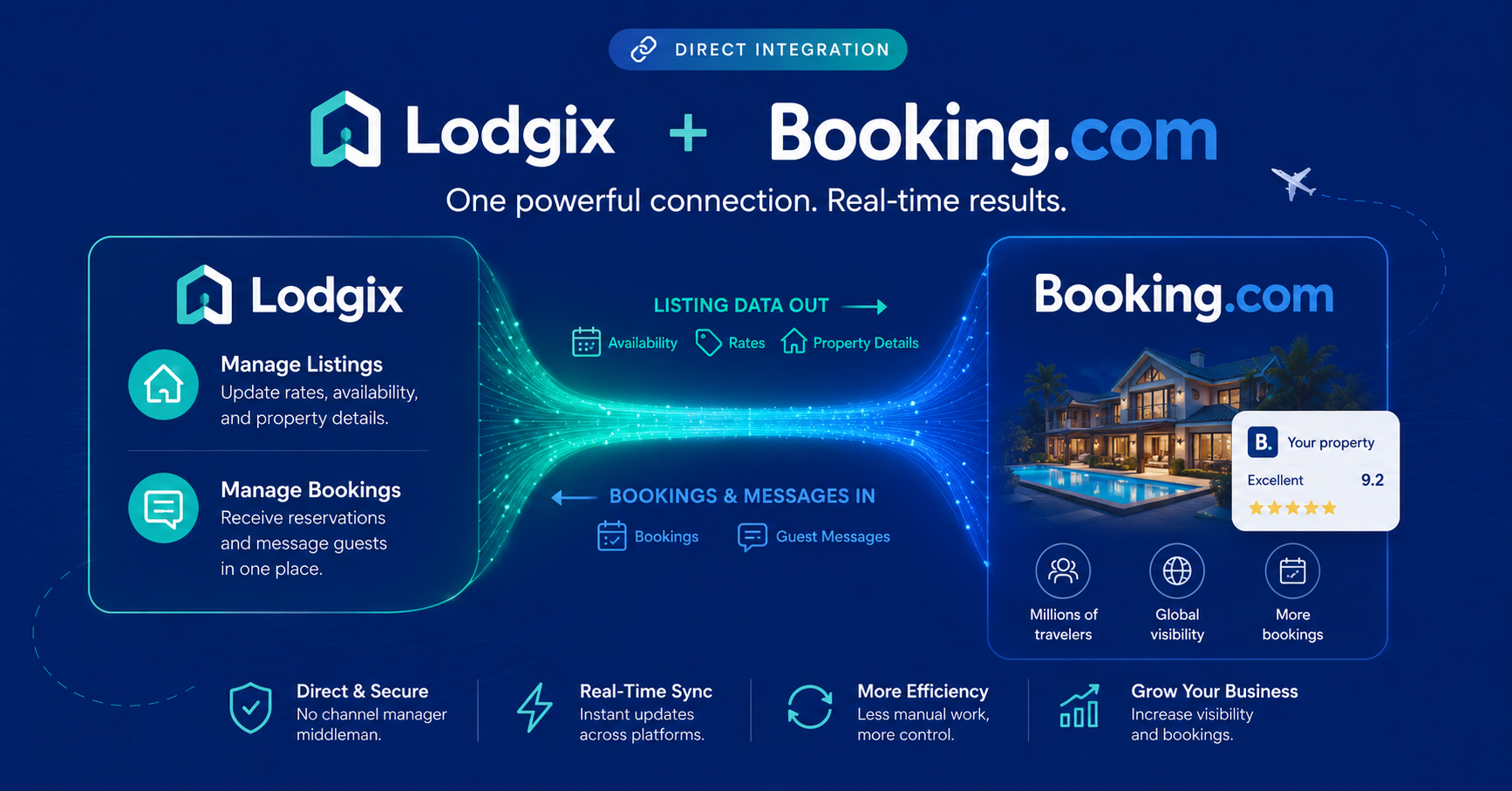
This is where the right software matters. Lodgix offers a state-of-the-art, direct connection to Booking.com that syncs availability, rates, content, and reservations seamlessly — no third-party channel manager required, and no extra per-booking fees layered on top of Booking.com’s commission. That means more of every reservation stays in your pocket. Lodgix also automates the pieces that trip up most managers: collecting and storing guest payment details, sending rental agreements, managing damage deposits, and triggering guest communication workflows. When Booking.com is connected properly through a system built for vacation rentals, it stops being a risky experiment and starts producing real, consistent revenue.
Adding Booking.com to your distribution mix isn’t right for every manager, but for those willing to set it up correctly, it can unlock a significant new stream of bookings and reduce dependence on Airbnb and VRBO. The key is treating it with the same care you give your other channels — and using the right tools to make the integration painless.
Key Takeaways
- Booking.com offers access to a huge international audience that Airbnb and VRBO often miss.
- The platform’s guest-friendly policies require strong payment workflows, rental agreements, and damage deposit handling.
- Success on Booking.com depends on accurate calendar sync, smart pricing, and program participation like Genius and Preferred Partner.
- Lodgix provides a direct, cost-effective Booking.com connection that automates the trickiest parts of the channel.
- Diversifying beyond Airbnb and VRBO reduces risk and can meaningfully grow total bookings when done right.