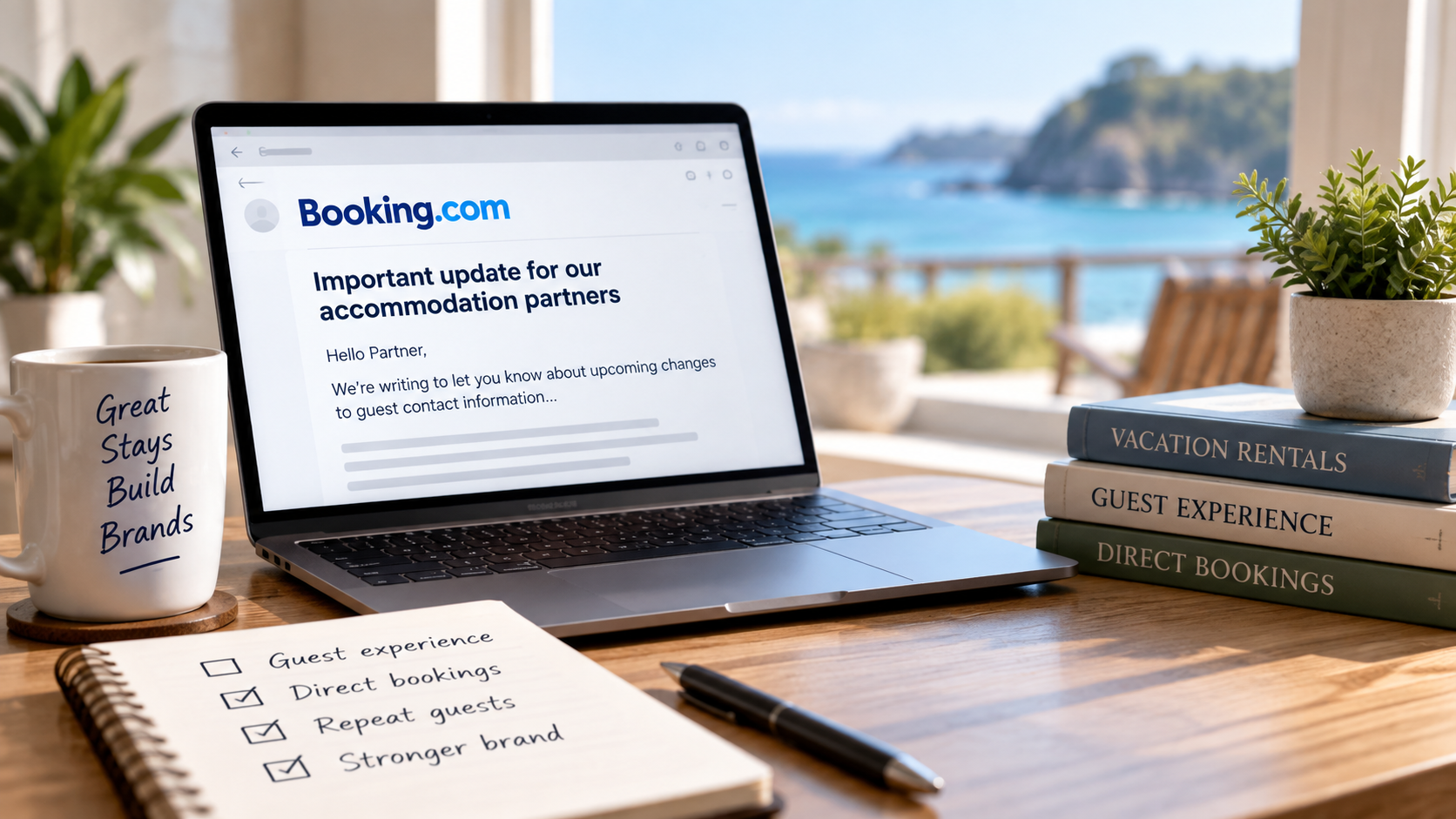
We received the following email from Booking.com today. The net is that Booking.com will no longer be transmitting guest phone numbers through their API to connectivity partners. Guest phone numbers will only be accessible from within Booking.com.
Helping protect your guests from ongoing phishing attacks
Following numerous reports from impacted travelers, we are aware of an increase in fraudulent messages being sent to guests. This is usually in an attempt to get them to urgently transfer money to keep their reservations. These messages often come by WhatsApp or text message and include real reservation details, which makes them more believable.
What are we doing to protect your guests
Without a phone number, cybercriminals cannot target your guests by WhatsApp or text message. By reducing the number of places this information can potentially be accessed, we can help minimize the spread of phishing activity. That’s why phone numbers will no longer be transmitted automatically through connectivity channels as of September 28.
If you need to reach one of your Booking.com guests, you can still access the phone number on your Extranet or the Pulse app. You can also continue to communicate using the Booking.com messaging system, as well as the masked guest email address Booking.com provides. As always, guest information should continue to be handled mindfully and securely.
How do I access the guest’s phone number?
The guest’s phone number will continue to be accessible in the Reservations tab in the Extranet. Locate the reservation number and click Show phone number in the Reservation details section.
You can also access it in a similar way from the Bookings tab in the Pulse app.
What else can I do to protect my business?
Booking.com says cybercriminals are targeting reservation data wherever it can be accessed, including accommodations, businesses, and technology providers across the industry. Its recommended precautions include:
- Enable two-factor authentication on every service that supports it.
- Enable the messaging AllowList in your Extranet so fraudulent links can be automatically blocked.
- Keep antivirus and anti-phishing software up to date and run regular full scans.
- Watch for unexpected changes to contact details, financial information, rates, availability, message templates, or photos.
- Check third-party platforms for suspicious activity, unfamiliar users, or unusual data exports.
- Train staff to recognize phishing and never share credentials with someone claiming to be from Booking.com.
If suspicious activity is discovered, Booking.com also recommends:
- Run anti-virus and anti-malware software on your computer and/or network.
- Clear browser cookies on browsers used to access the Extranet or third-party booking tools.
- Reset passwords for email and integrated third-party systems such as your PMS, channel manager, CRM, or connectivity provider, using a unique strong passphrase for each.
What do I tell my Booking.com guests?
Booking.com says its Customer Service teams are available 24/7 to assist guests who may have received fraudulent messages. Guests can contact Booking.com through the Help Center in their booking confirmation or through the Booking.com app.
Property partners can contact Booking.com through the Extranet inbox or the dedicated support number shown there.
Best regards,
Your Booking.com Team
Source: Booking.com partner communication dated September 22, 2026. This public-facing version removes recipient-specific information, tracking links, and email-client code.
Starting September 28, Booking.com will stop sending guest phone numbers through Lodgix. The reason is legitimate. Scammers have been contacting Booking.com guests on WhatsApp and by text using real reservation details, pressuring them to send money urgently to “keep” their booking. Removing phone numbers from every system that touches reservation data shrinks the number of places criminals can steal them from. For property managers, there is some upside: fewer guests defrauded under your property’s name (and fewer panicked calls, chargebacks, and bad reviews that follow), plus less sensitive guest data stored in your systems, which lowers your exposure if any tool you use is ever compromised.
The downside is operational friction. Any automated texts you send Booking.com guests through Lodgix / Twillio, such as arrival instructions, door codes, or checkout reminders, will stop reaching those guests unless you look up each number manually in the Booking.com Extranet or the Pulse app. Teams that rely on a phone number for urgent issues (a lockout at 11pm, a housekeeper running late) will need a new habit, and larger portfolios will feel this most. Booking.com messaging and the masked guest email address still come through, so those become your primary channels. Before the 28th, it’s worth auditing your automated text messages, routing Booking.com guest communication to email or Booking.com messaging, and taking Booking.com’s security advice seriously, especially two factor authentication and the messaging AllowList. Property managers’ own accounts are a prime target.
Lodgix now has a direct connection to Booking.com!
Changes like this are a reminder of how much your channel connection matters. Earlier this year, Lodgix launched a new Booking.com connection that replaced our previous integration through NextPax, and the difference is substantial:
- Connected on minutes, not a waiting game. With NextPax, you mapped your IDs and then waited for NextPax to email you when the connection went live. Now you request publish access in Lodgix (reviewed within 24 hours), select the connection in your Booking.com Extranet, and it’s approved instantly.
- Guest date changes sync automatically. Previously, when a guest changed dates on Booking.com, you got an email and had to fix the Lodgix invoice by hand. Now the reservation updates and the invoice regenerates on its own. You only hear from us if the new dates conflict with another booking.
- Customer support is done by Lodgix. No waiting on a third party. No more “he said, she said.” We can now troubleshoot and fix connectivity issues in minutes, not days.
- Your fees show up where guests see them. Cleaning, damage protection, and service fees (fixed amount or percentage) are set right on the Lodgix Booking.com integration page, and you can assign damage deposits to your properties.
- Lodgix does the listing work. Create a bare minimum listing on Booking.com, connect it, and Lodgix fills in your photos, descriptions, rates, and amenities, along with per person rates, occupancy limits, minimum age, pet policies, and check in and checkout times.
- Guest messaging flows through the Unified Inbox. With NextPax we did not have access to the guest messaging API, now we do! All guest conversations flow through Lodgix and to the guest App whether that be Pulse or Staylio.
If you’ve been on the fence about Booking.com, or you tried our old connection and walked away frustrated, now is a great time to take another look. Most Lodgix managers use a rate multiplier (1.20 is common) to pass slightly higher rates to Booking.com and cover the commission, so the added bookings don’t come at the expense of your margins. Go to Settings > Integrations in Lodgix, choose the Booking.com tab, and request publish access. Our support team is happy to walk you through the setup.